
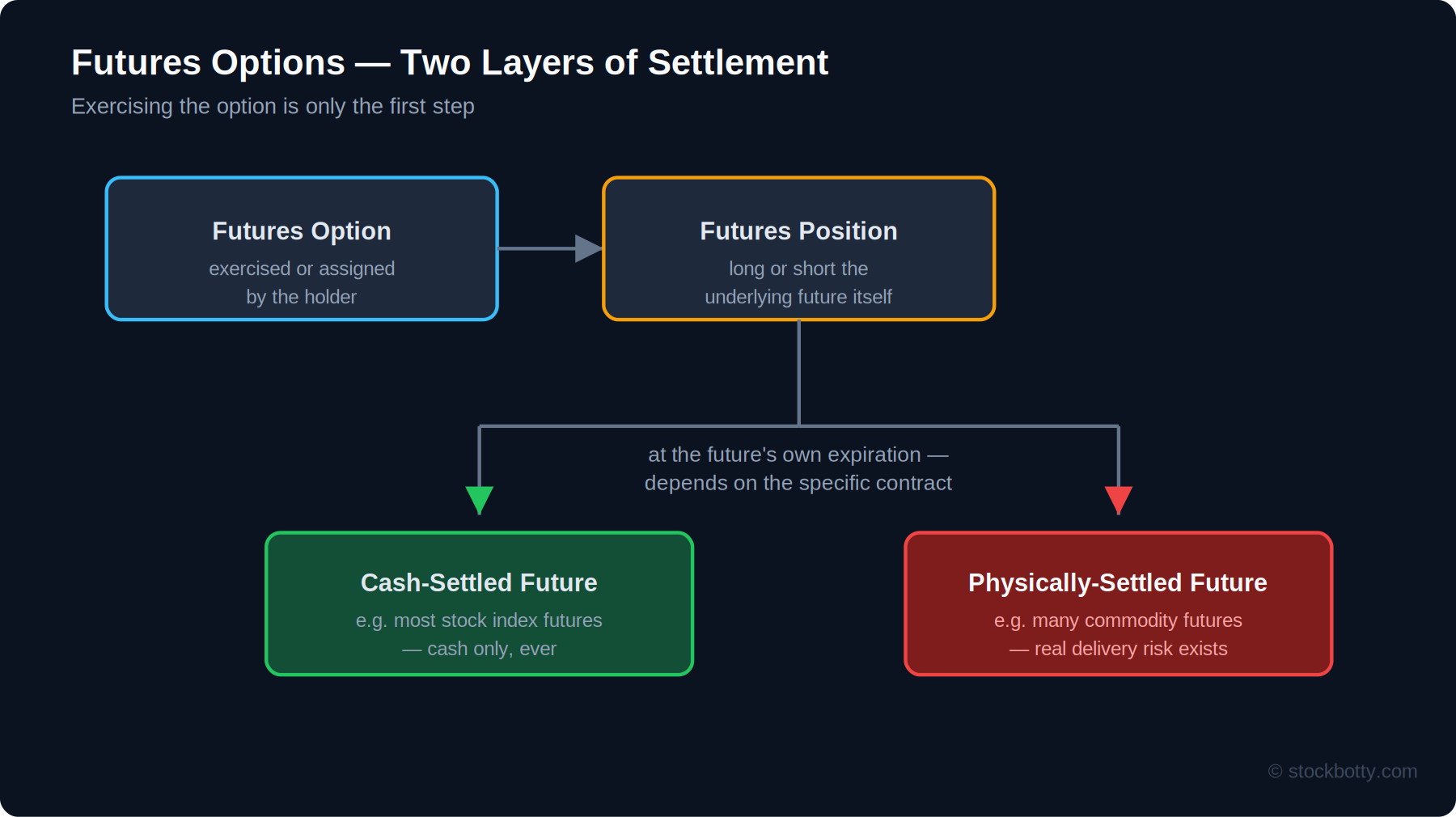
Futures options get less everyday attention than equity options, but they carry a mechanical wrinkle worth understanding before trading them: exercising one doesn’t deliver cash or a physical commodity directly. It delivers a position in the underlying futures contract, which then has its own separate settlement rules – rules that vary significantly depending on which specific future is involved.
What a Futures Option Actually Is
A futures option gives its holder the right to take a position in a specific futures contract at a specific price, rather than the right to buy or sell a stock or an index directly. Everything covered elsewhere on this site about calls, puts, strikes, and expiration applies the same way – the difference is entirely in what sits underneath the option.
Exercise Delivers a Futures Position, Not the Underlying
This is the detail that catches people off guard: exercising a futures call doesn’t hand over barrels of oil or bushels of corn, and exercising a futures put doesn’t hand over cash directly. It results in a long or short position in the underlying futures contract itself. That new futures position then behaves exactly like any other futures position – subject to its own margin requirements, its own daily mark-to-market, and, eventually, its own settlement.
Then: Cash-Settled vs. Physically-Settled Futures
Whether that resulting futures position ever involves real delivery depends entirely on the specific contract, not on anything about the option that led to it:
- Cash-settled futures – most stock index futures, many interest rate futures – never involve physical delivery under any circumstances. At the future’s own expiration, the difference between the contract price and the settlement value is simply paid in cash, the same mechanism covered for cash-settled index options in the assignment and exercise guide.
- Physically-settled futures – many commodity futures, including crude oil, natural gas, and various agricultural products – can result in real delivery obligations if a position is held into the contract’s delivery window. This is a genuine, practical risk for anyone holding such a position, not a theoretical edge case.
First Notice Day: Delivery Risk Can Start Before Expiration
For physically-settled futures, the date delivery risk begins is often First Notice Day – which can fall well before the futures contract’s technical expiration date. Once past first notice day, holders of a long position in a physically-settled future can be selected to take delivery. This is a specific, contract-defined date that has no equivalent in equity options, and it’s the single most important date to be aware of for anyone whose futures options exercise could result in holding a physically-settled contract past it.
Margin Implications of an Unexpected Futures Position
Unlike an assigned equity option, which simply changes what’s held in an account, an assigned or exercised futures option that results in a futures position introduces a position that’s marked to market daily and can generate margin calls immediately based on price movement. Being unexpectedly holding a futures position – through an exercise that wasn’t fully planned for – can create an urgent, same-day margin requirement in a way that stock assignment generally doesn’t.
How to Avoid Unwanted Delivery Risk
- Know the settlement type of the specific future before trading options on it – this information is published in the contract’s official specifications by the exchange it trades on, and shouldn’t be assumed based on the underlying asset class alone.
- Close or roll positions in physically-settled futures options well before first notice day, rather than waiting until the contract’s technical expiration.
- Treat an unplanned futures assignment as an immediate priority, given the daily mark-to-market and margin implications, rather than something that can be addressed at leisure the way an equity assignment often can be.
Frequently Asked Questions
What happens when you exercise a futures option?
It results in a position in the underlying futures contract itself – long or short, depending on the option – not cash and not the physical commodity directly. That futures position then carries its own margin requirements and its own separate settlement rules.
Are all futures cash-settled?
No. Many financial futures, such as most stock index futures, are cash-settled and never involve physical delivery. Many commodity futures, such as crude oil or agricultural products, are physically settled and can result in real delivery obligations if a position isn’t closed in time.
What is First Notice Day?
The date on which a physically-settled futures contract’s holders become at risk of being required to make or take delivery, which can fall before the contract’s technical expiration date. Positions in physically-settled futures are typically closed or rolled before this date to avoid delivery obligations.
Why does margin matter more for assigned futures options than for assigned equity options?
A futures position is marked to market daily and can require additional margin immediately based on price movement, unlike a stock position from an assigned equity option. Being unexpectedly assigned a futures position can create an urgent, same-day margin requirement.
How do I check whether a specific futures contract is cash- or physically-settled?
Every futures contract’s settlement type is defined in its official contract specifications, published by the exchange it trades on. This should be confirmed directly for the specific contract before trading options on it, rather than assumed.